
KWPN Raises the Bar on D-OC, What It Actually Means, and Why Should We Care
Raising health standards is never the problem. But when deadlines start driving decisions more than principles, it’s fair to ask whether we’re improving horses, or just improving paperwork.

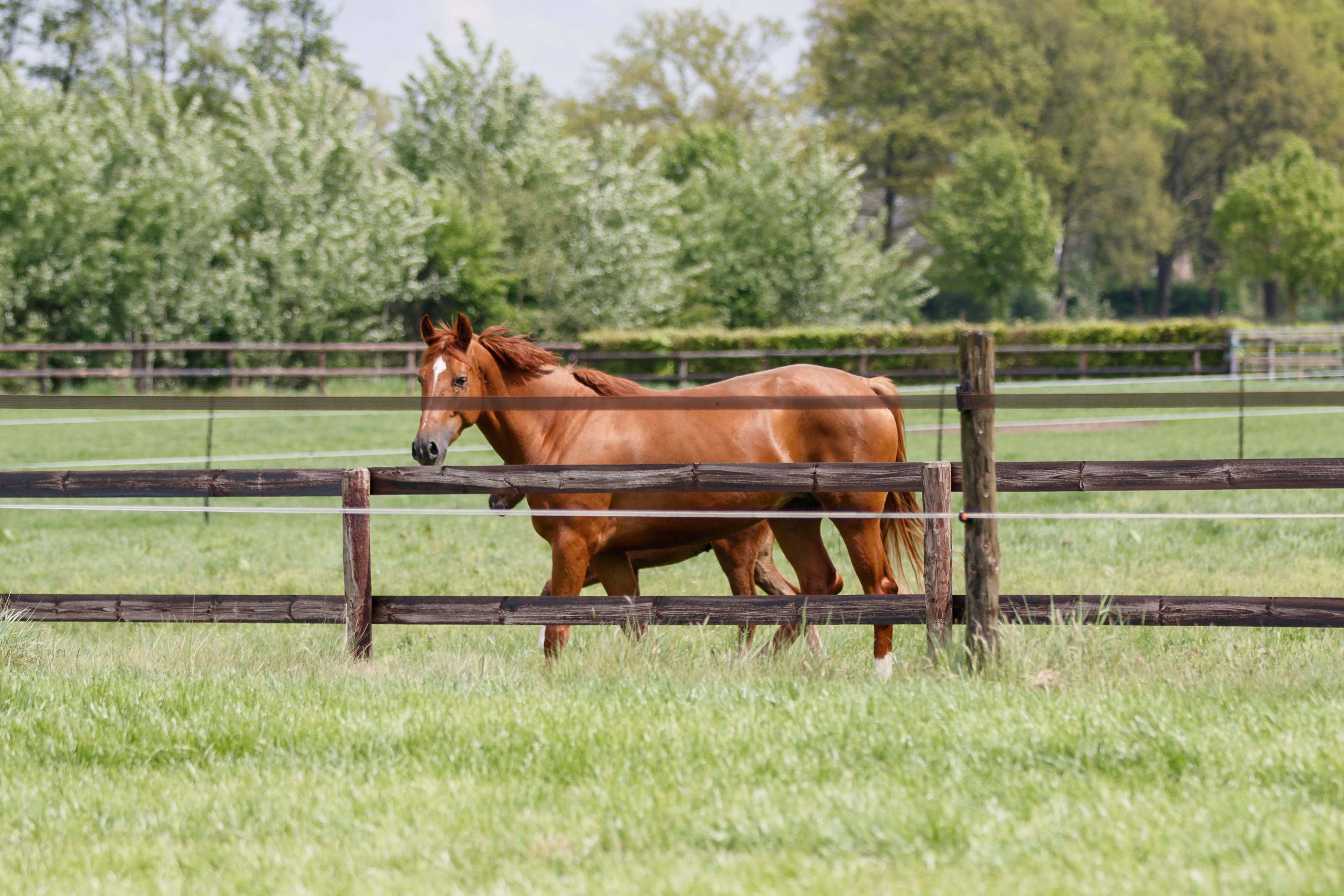
From March 2026, the Dutch studbook KWPN will tighten the rules for mares aiming for elite status via the D-OC Predicate1.
The minimum score rises from 96 to 99, a change that sounds modest on paper, but signals a clearer shift in breeding philosophy.
D-OC is not an X-ray and not a diagnosis.
It’s a genetic risk score estimating how likely a horse is to pass on Osteochondrosis. In simple terms, higher is better. A score of 100 represents the population average, meaning 99 already places a horse on the healthier side of the genetic spectrum.
By raising the threshold, KWPN is deliberately narrowing the gate. Fewer mares will qualify through D-OC alone, but the average genetic health of those that do is expected to improve.
Mares that earn the predicate keep it for life, even if later recalculations slightly adjust their score.
Stallions, however, remain subject to recalculation as new family data becomes available, a reminder that genetic insight is not static, but evolving.
It’s a small numerical change with a clear message: health selection is no longer just encouraged, it’s being sharpened.
Of course, a raised threshold also creates something else, a deadline.
Between now and the end of February 2026, mares scoring between 96 and 98 still qualify. After that, the door quietly closes.
It wouldn’t be surprising if the coming months see a small but noticeable rush to get D-OC results processed before the new limit kicks in.
Not cheating. Not cutting corners. Just timing.
Which, in itself, says something about how predicates are used in practice, sometimes less as a long-term breeding compass, and more as a box that really should be ticked now, while it still can be.
What makes this conversation slightly surreal is that outside the predicate system, many horses are already held to similar, or even higher, standards.
Not being KWPN, not chasing predicates, and quite frankly not contributing to any breeding statistics at all. Just the quiet expectation that soundness matters.
Which raises an additional, uncomfortable but fair question, are we tightening rules to improve horses, or to improve paperwork?
Health is never a bad place to raise the bar. But when deadlines start driving decisions more than principles, it’s worth asking who the system is really serving.
D-OC is a genetic risk score for Osteochondrosis (OCD), based on DNA data and family information.
It does not mean a horse has OCD, it estimates how likely a horse is to pass on OCD.
The score is relative, not absolute.
100 = population average
Higher than 100 = lower genetic risk
Lower than 100 = higher genetic risk
So:
96 = slightly worse than average
99 = clearly better than average
That’s why raising the bar from 96 → 99 matters more than it looks.
PROK, by contrast, is based on X-rays of the individual horse.
So:
PROK = what this horse looks like
D-OC = what this horse is likely to produce
KWPN uses both to balance phenotype + heredity.